From a problem on the bund to a registered product
Our development pipeline is short by design: field observation, lab validation, paired-pond trials, registration. No formulation ships until it survives all four.
Five stages, every product
Problem definition
Field technicians log recurring pond failures — Vibrio load, soft shell, ammonia spikes — into a seasonal problem register.
Strain & molecule selection
Candidate strains and actives are screened for stability, compatibility and Indian salinity tolerance.
Laboratory validation
CFU potency, enzyme activity, assay and shelf-life studies under accelerated storage conditions.
Controlled pond trials
Paired-pond trials on partner farms measuring survival, FCR, ADG and water parameters.
Registration & release
CAA registration, label finalisation, batch coding and technician training before commercial launch.
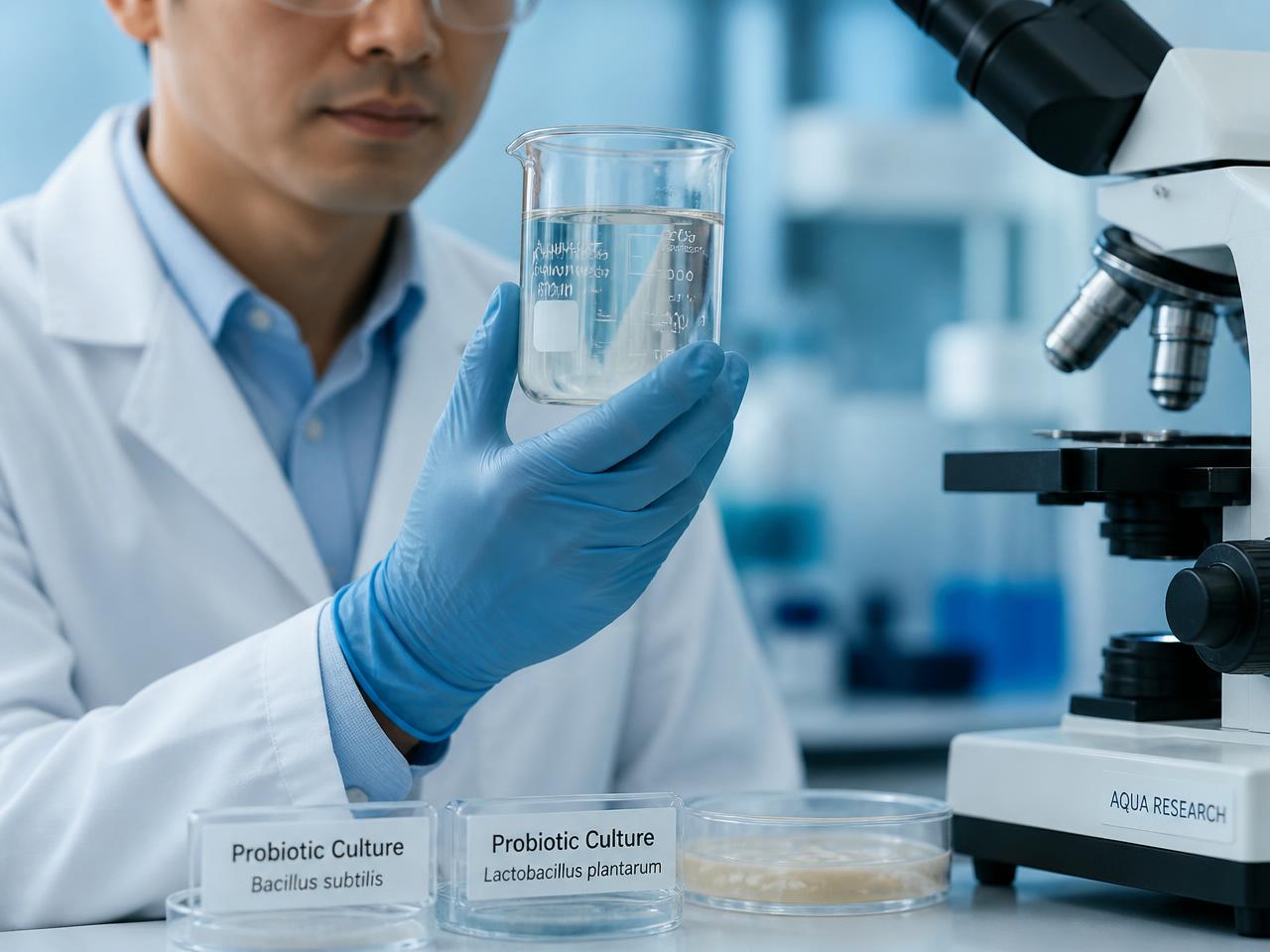
What we measure before a batch leaves
CFU potency
Plate counts confirming declared colony-forming units per gram or millilitre.
Enzyme activity
Units of cellulase, xylanase, protease and beta-glucanase per batch.
Assay & purity
Active oxygen, EDTA and mineral content verified against label claims.
Stability
Accelerated shelf-life studies validating the 24-month best-before window.
What our lab is working on next
Phage-informed Vibrio management, nursery-stage gut priming formulations, and slow-release mineral pellets tuned for inland low-salinity culture.